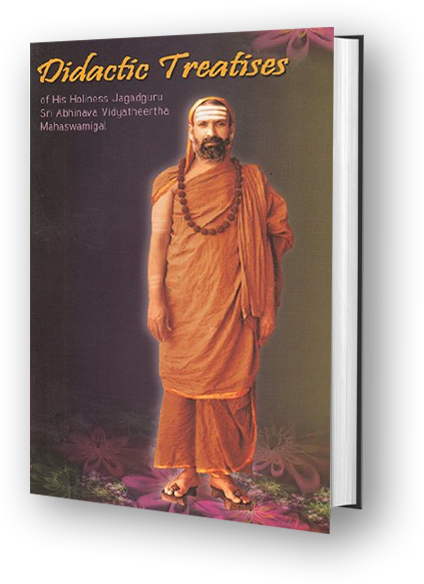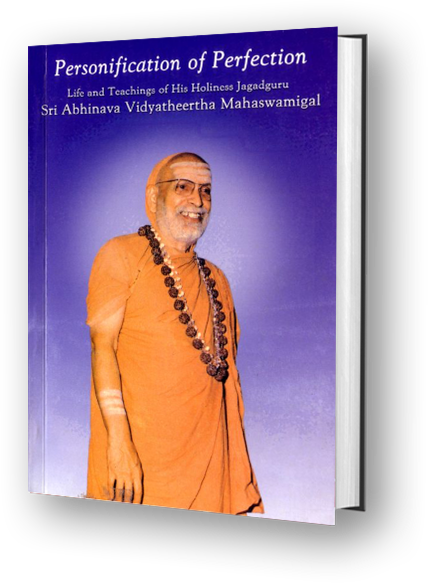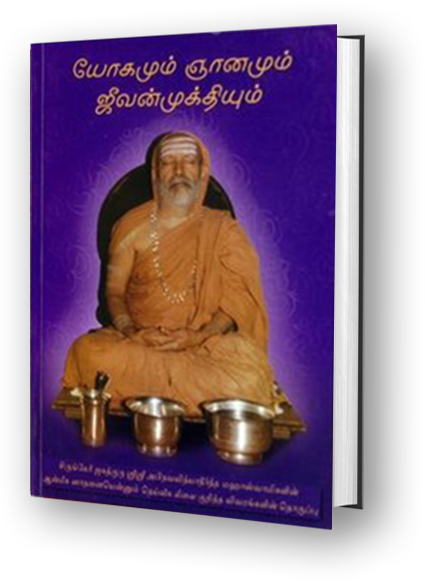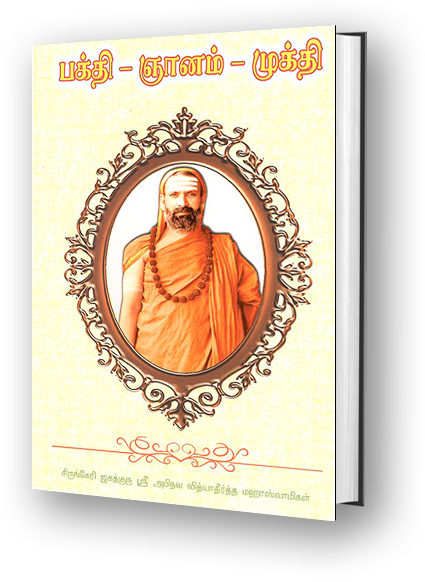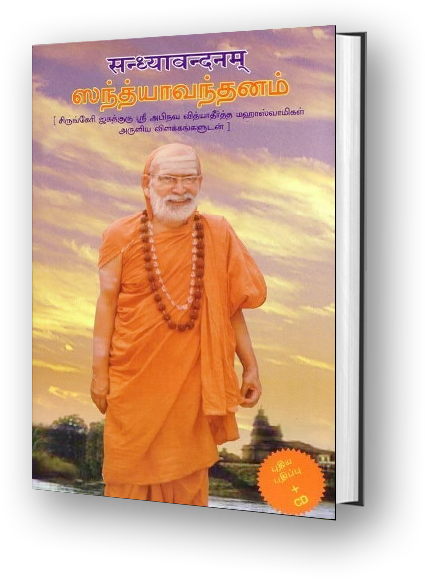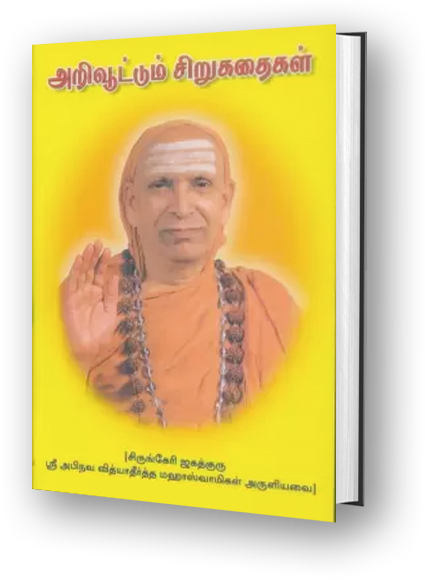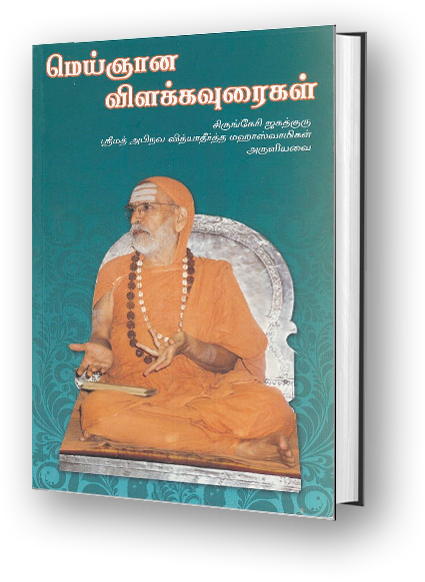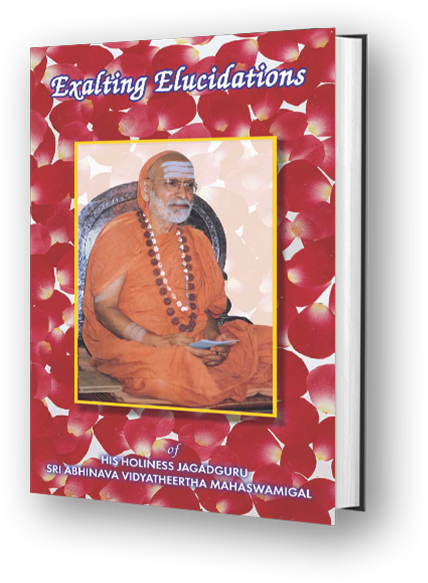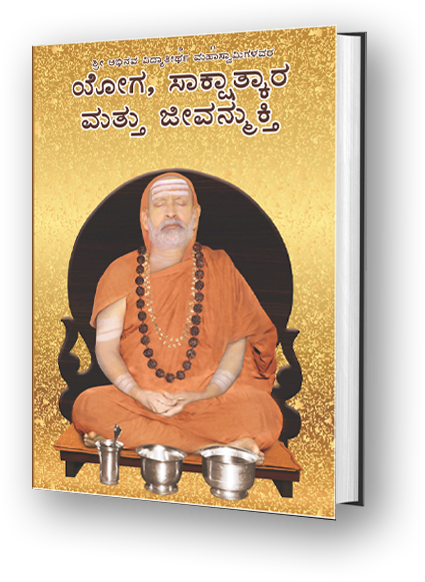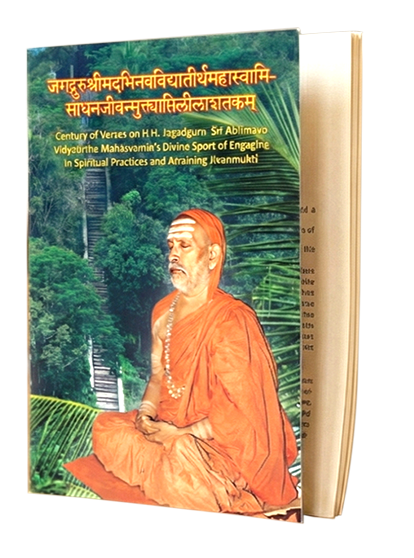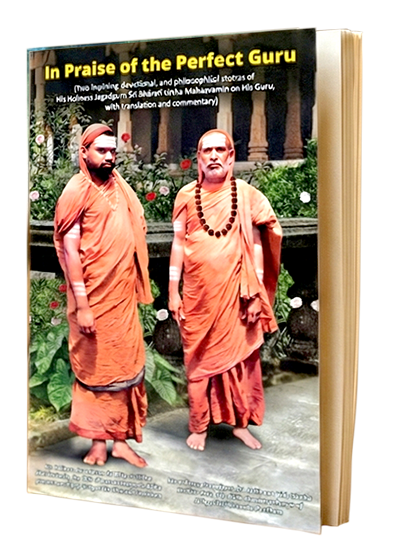
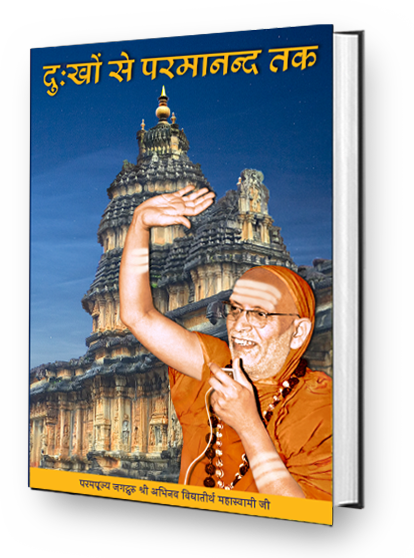
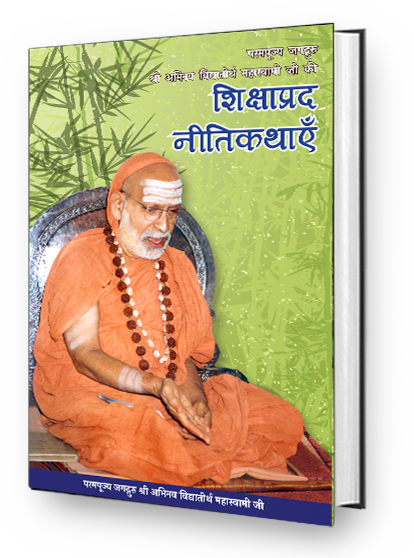
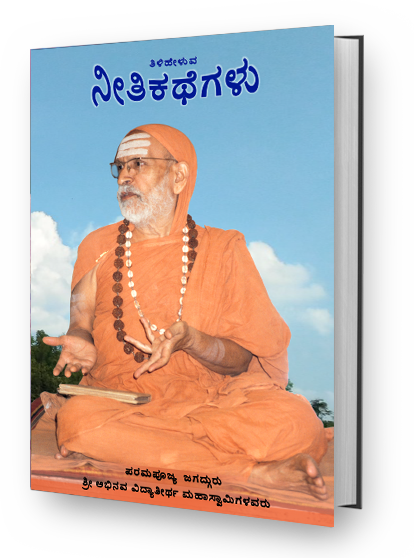
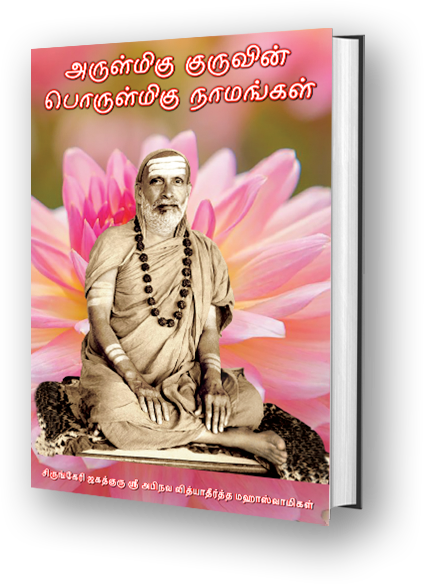
His Holiness Jagadguru Śrī Bhāratī-tīrtha Mahāsvāmin composed two devotional, philosophical, captivating, and inspiring stotras on His Guru, His Holiness Jagadguru Śrī Abhinava Vidyātīrtha Mahāsvāmin, during His Guru’s lifetime. The Śrīmad-Abhinava-Vidyātīrtha-Akṣaramālā-Stotram, the first of these, occurred to Him spontaneously while He was performing His morning āhnika in Sringeri in May 1978. It comprises eight stirring verses in the anuṣṭubh metre, each verse beginning, in succession, with the syllables a, bhi, na, va, vi, dyā, tī and rtha, thus forming His most revered Guru’s holy name – ‘Abhinava Vidyātīrtha’. At the close of each verse, He devotedly submits that He seeks refuge in Him. In this stotra, He venerates His Guru as the Supreme Brahman, as Īśvara, and also as a jīvanmukta-guru par excellence. The Gurudhyānam spontaneously occurred to Him in March 1982, when He was in Maharashtra, accompanying His Guru on an all-India vijaya-yātra. This has five verses in the anuṣṭubh metre, followed by a distinct sixteen-syllable, prayerful statement. In the five verses, He describes His Guru as abiding effortlessly in nirvikalpa-samādhi on the Supreme Brahman of the nature of absolute existence, pure consciousness and infinite bliss – and as the Supreme Brahman and Īśvara.
A disciple translated these verses and also authored a commentary on them and submitted the text to His Holiness Jagadguru Śrī Bhāratī-tīrtha Mahāsvāmin. His Holiness graciously perused the material and fully approved it. He also affirmed that the interpretation of the verses accorded with His own view. He blessed that the material be published. His Holiness also subsequently vouchsafed the stotras in His own handwriting to the disciple and permitted them to be included in the book.
The Centre for Brahmavidya is privileged to publish this booklet titled “In Praise of the Perfect Guru” on 6 December 2025, on the holy occasion of the Sākṣātkāra (Enlightenment) Day of His Holiness Jagadguru Śrī Abhinava Vidyātīrtha Mahāsvāmin.






.png)
.png)
.png)
.png)